
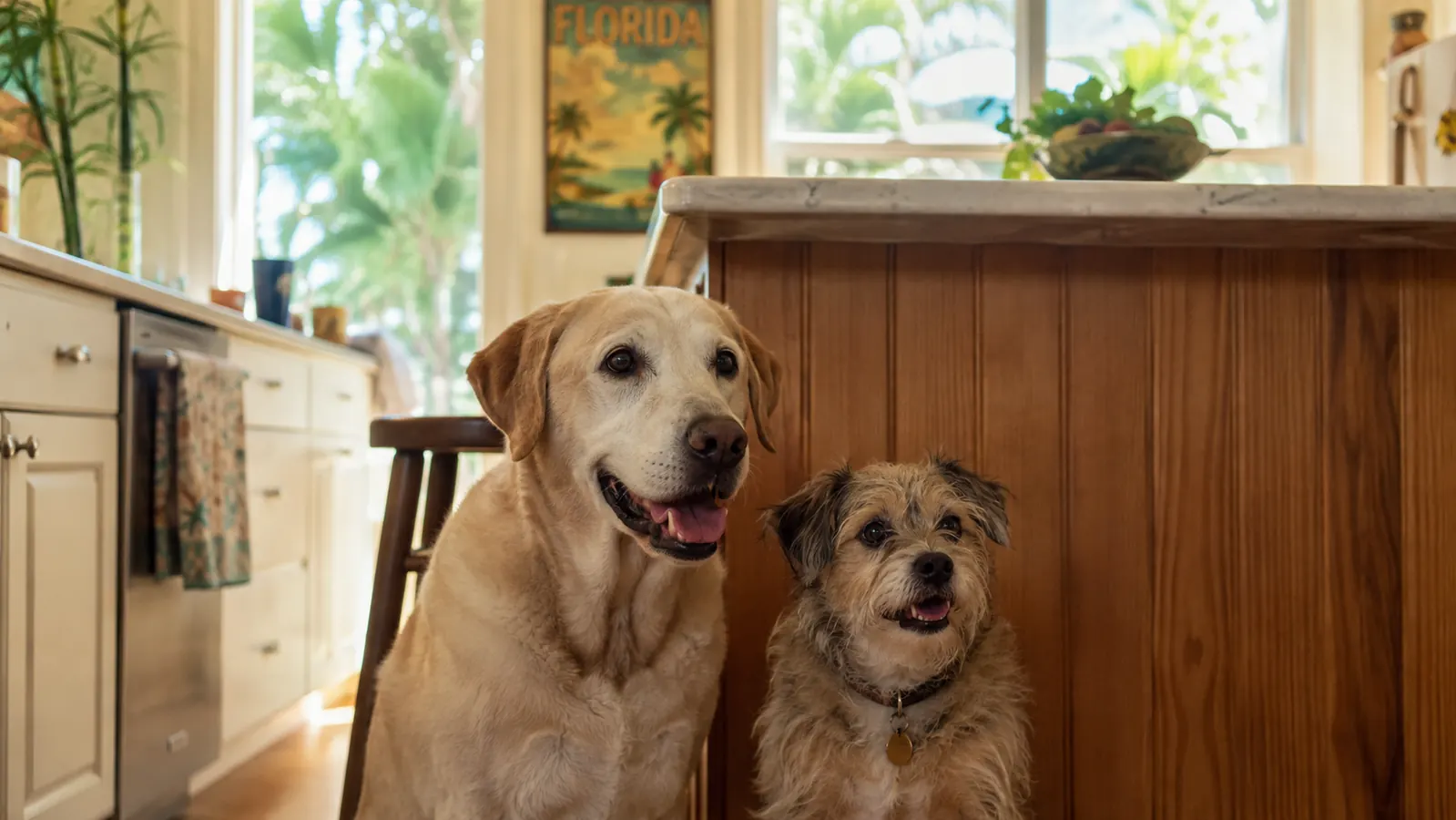
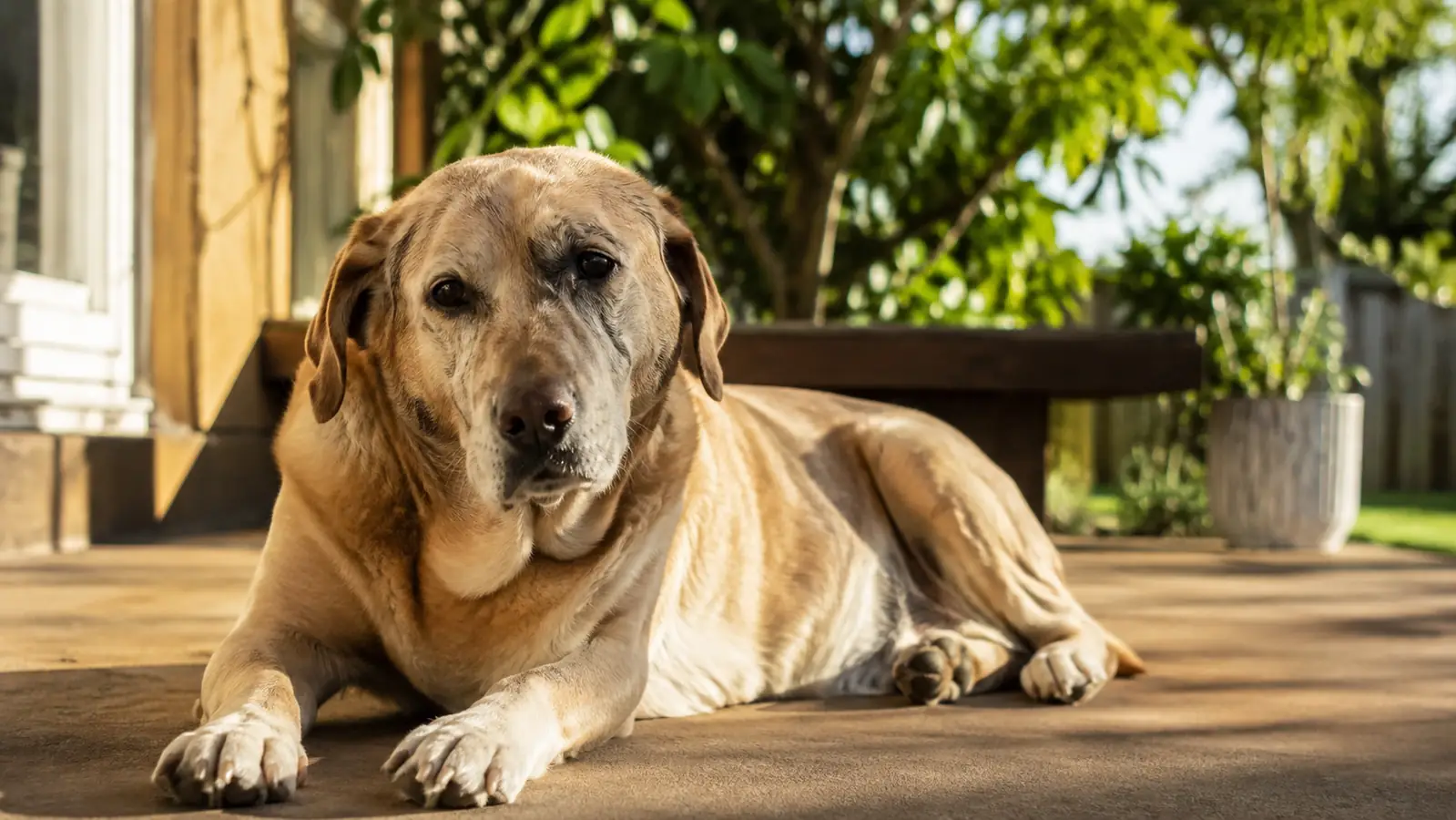
Gus started losing the shine in his coat about a year after his twelfth birthday. Nothing dramatic, just something I noticed while brushing him on the back porch one Saturday: fur that used to catch the Ocala sun and throw it back had gone flat, a little dry at the edges, and left more of itself on the brush than it used to. My terrier mix Millie, nine and healthy as ever, still sheds glossy fur all over the couch without any help from me. Standing there with a handful of Gus's dull coat, the difference was obvious.
I had already burned through two supplements that did nothing measurable for him, so I was skeptical when I ordered Zesty Paws Salmon Oil. A friend who works at Gus's vet clinic mentioned it offhand, said a lot of clients use it for exactly this kind of dull-coat, flaky-skin situation. I have now been through four bottles of Zesty Paws salmon oil over about five months, splitting the pump between Gus's bowl and, off and on, a few drops in Pearl's food, and I want to walk through what actually changed, what did not, and what nobody mentioned in the reviews I read before buying.
The Quick Verdict
A solid, no-nonsense salmon oil that visibly helped Gus's coat by around week six, if you can tolerate the fish smell and remember to shake the bottle before every pump.
Amazon Check Today's Price →See Today's Price on the Bottle That Turned Gus's Coat Around
It took about six weeks to see it, but it worked. Check current availability before deciding whether it fits your routine.
Amazon Check Today's Price on Amazon →How I've Used It
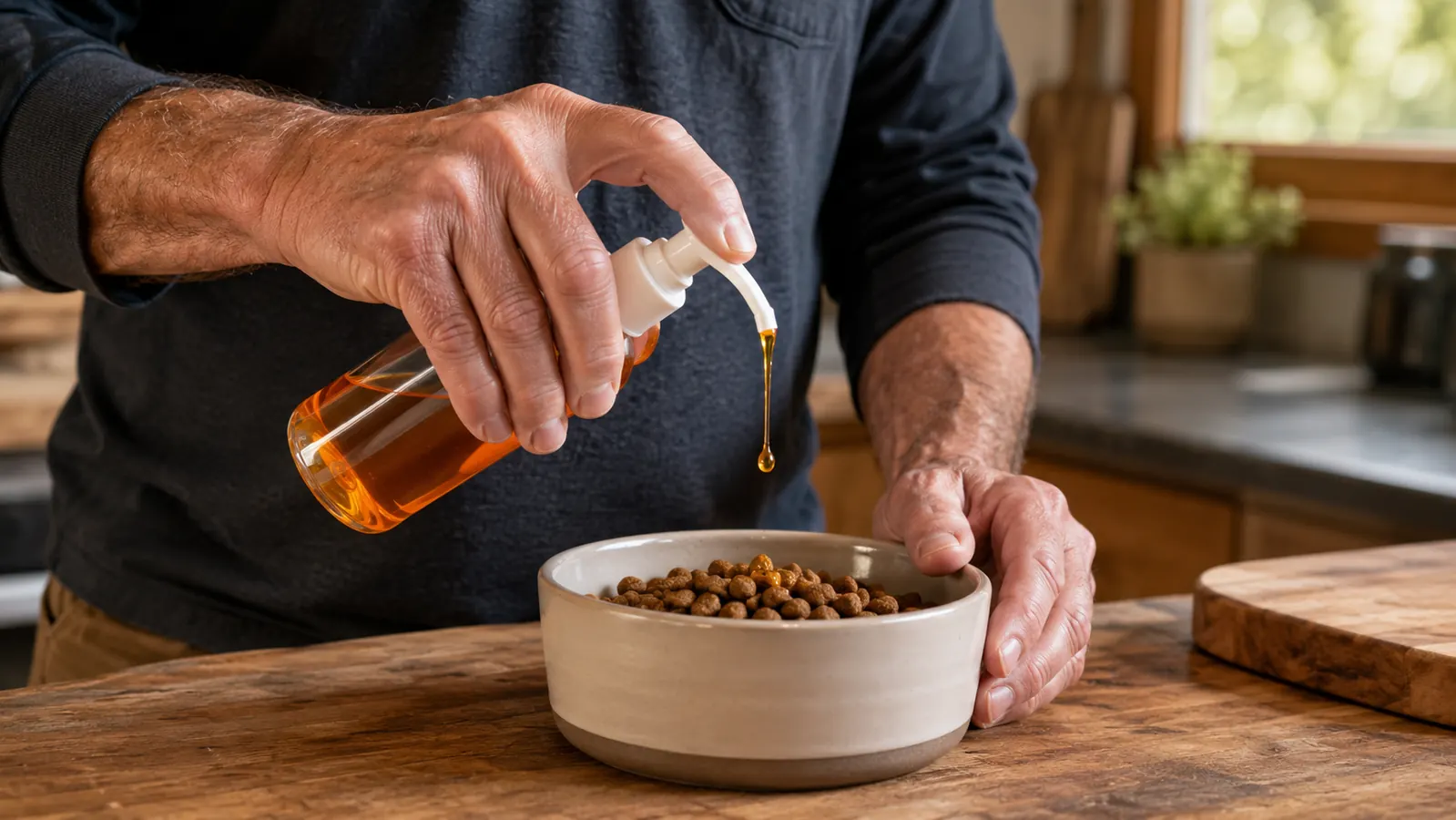
Gus gets one full pump of Zesty Paws salmon oil worked into his morning kibble and another with dinner, which lines up with the dosing chart on the bottle for a dog his size. I started slow, half a pump for the first three days, because any new supplement that upsets Gus's stomach is a whole ordeal, and I did not want to learn that lesson the hard way. He took to it immediately. He is not a picky eater, but he actively pushed his bowl toward me faster on oil mornings, which told me something about the taste even before I saw any change in his coat.
Millie did not need it. She has no joint trouble and her coat has always looked healthy, so I used her as my baseline the whole time, the dog whose coat I was comparing Gus's to on the porch every weekend. I did give her a token pump on a handful of days just to see whether it changed anything for her, and it did not do anything visible one way or the other, which honestly makes sense. A supplement aimed at a dry, dull coat is not going to do much for a coat that already looks fine.
Pearl was the trickier case. She is ten, an indoor cat, and about as suspicious of new smells as any cat I have owned. The bottle's directions cover cats too, a smaller amount worked into wet food rather than the full canine pump, and I mixed a few drops in with her usual food for about three weeks before deciding it was worth continuing. She sniffed it out the first two times and walked away, then seemed to get used to it once I started stirring it in more thoroughly instead of just drizzling it on top.
Consistency turned out to be the hardest part, not the pets. Two separate weekends we had house guests, and the morning routine slipped, no pump for Gus, nothing for Pearl. Both times I noticed his coat backslide slightly within about ten days of missing doses, which told me this is not a supplement you can use on and off and expect steady results from. It works best treated like a daily habit, the same as brushing his teeth or filling the water bowls, not something you remember every few days when you think of it.
What's Actually in the Bottle
Zesty Paws Salmon Oil is a liquid fish oil supplement built around omega-3 fatty acids, primarily EPA and DHA, sourced from wild-caught fish. The label lists it as free of synthetic preservatives, using natural vitamin E instead, which is fairly standard for this category but worth checking on any bottle you buy since not every brand does it. There is also naturally occurring astaxanthin, the pigment that gives salmon its color, which shows up in a lot of skin-and-coat supplements for pets.
What it is not is a medication, and Zesty Paws does not market it as one. It is a food-grade oil meant to be added to a normal diet, not something aimed at diagnosing or treating a specific condition. If your dog or cat has a diagnosed skin condition, an allergy, or anything more serious than dry, dull fur, that is a conversation for your vet, not a supplement label. I asked Gus's vet directly whether a daily salmon oil was reasonable for a senior dog with mild hip stiffness she had already examined, and she said yes, it was fine to add, though she was clear it was not going to do anything for his hips specifically. That distinction mattered to me and I think it should matter to you too.
What Changed, and What Didn't
The first two weeks, nothing. I almost wrote this whole review off around day twelve because I did not see or feel any difference when I ran my hand down Gus's back. Around week four, his coat felt slightly softer, less like straw at the tips, though I could not have proven it to anyone but myself. By week six, the difference was real enough that my husband noticed it without me pointing it out, which is my actual bar for whether something worked. Gus's coat had that same catch-the-morning-light quality that Millie's had the whole time.
The flaking along his lower back, which had been the thing that first got my attention, was noticeably reduced by week ten. Not gone completely, and I do not think any supplement erases that on its own, but I was brushing out visibly less dry skin than I had been in the spring. What did not change was his hip stiffness. He still gets up slowly in the morning and still takes the porch steps a little carefully, exactly as before. That is not a strike against the product. It was never sold to me as a joint supplement, and I do not think it is fair to score it against a job it never claimed to do.
Pearl was harder to judge because indoor cats groom themselves so much that a coat change is subtler day to day. Her fur did feel a little less dry along her back by the end of the third bottle, but I want to be honest that this is the softest of my three observations. If you have a cat, treat any coat improvement as a slower, quieter result than what you will see in a dog.
I also want to be honest about my own bias going in. I wanted this one to work, because I was tired of throwing bottles away half used, and that kind of hope can make a person see improvement that is not really there. So I leaned on my husband's read of Gus's coat more than my own for the first month, specifically because he had no idea what week we were on or what I was hoping to see. When he brought it up on his own, unprompted, on a Sunday walk around week six, that was the point I trusted the change was real and not something I had talked myself into.
The Parts Nobody Mentions in the Reviews
The smell is real and it is not subtle. This is fish oil, not a flavored treat, and it smells exactly like what it is. It gets on your hands during the morning pump, it lingers faintly on the counter, and if you are sensitive to that kind of thing, it is worth knowing before the bottle shows up rather than after. Gus and Millie do not care, obviously, but I do keep a hand towel by the bowls now specifically for this.
The pump itself is the other thing I did not expect to have opinions about. On two of my four bottles, it started dispensing unevenly around the halfway mark, sometimes a thin drip instead of a clean pump, sometimes an extra half-pump's worth in one go. Shaking the bottle before every use helped, and I now do it out of habit, but a pump that needs babying partway through a bottle is a small annoyance you will hit if you use this long enough.
A 16 oz bottle empties faster than you would guess once you are dosing a larger dog twice a day. Gus alone got through a bottle in a little under six weeks at his dosing level. That is a fine tradeoff if it is working, but it is worth doing the math on your own dog's size and dosing schedule before you settle into a routine, rather than being surprised when the bottle runs low sooner than expected. I also learned the hard way that leaving a bottle in a hot car for an afternoon is a mistake. One bottle went noticeably rancid-smelling after that, and I had to toss the rest of it. Keep it somewhere cool.
How the Cost Actually Shakes Out
I am not going to put a dollar figure on this because prices move around and what you pay will depend on where and when you buy, but I will say the cost per day felt reasonable next to what I spent on the two supplements that did nothing for Gus before this one. A bottle that lasts a smaller cat weeks longer than it lasts a seventy-plus pound dog on twice-daily dosing is worth thinking through against your own household, not against mine.
The real cost comparison, in my head, was never against doing nothing. It was against the two products I had already tried and abandoned, both of which cost about the same per bottle and produced zero visible change in Gus's coat over roughly a month each. Measured that way, four bottles of Zesty Paws that actually did something felt like the better use of the money, even with the smell and the occasional pump trouble factored in.
Other Options I Looked At
Before landing on Zesty Paws, I looked seriously at fish oil capsules instead of a pump bottle. Capsules solve the mess and smell problem since they are sealed until Gus swallows them, but dosing gets less precise for a dog his size, since you are working in whole-capsule increments rather than a measured pump, and I was not confident I could get him to reliably eat a capsule hidden in food every single day without some getting spit back out. I go into that comparison in more detail in a separate piece if you are trying to decide between the two formats for your own dog.
I also considered just adding canned sardines or mackerel to Gus's diet a couple times a week instead of a supplement at all, which some people online swear by. I did not go that route mainly because dosing consistency matters more to me than the idea sounds in theory, and a measured pump gives me a number I can actually track week to week.
I had also already tried two other joint-and-coat combination chews before this, chosen mostly because they were the ones on the shelf at the pet store closest to me, and neither one produced a coat change I could point to after a full bottle each. That history is exactly why I went in skeptical of Zesty Paws too. A brand name on a label has never been enough for me on its own, and it should not be enough for you either. What convinced me was the actual timeline, weeks four through six, not the marketing on the box.
What I Liked
- Visible coat improvement by around week six on a dog with dry, dull fur
- Easy to work into a normal feeding routine, no pilling or hiding capsules
- Dosing guidance covers both dogs and cats on one bottle
- No synthetic preservatives on the label
- Both Gus and Pearl accepted the taste without a fight once mixed in properly
Where It Falls Short
- Strong, unmistakable fish smell that lingers on hands and counters
- Pump became unreliable partway through two of my four bottles
- A 16 oz bottle runs out quickly for a larger dog on twice-daily dosing
- Needs to be kept somewhere cool, one bottle went rancid after a hot afternoon in the car
- Did nothing for Gus's existing hip stiffness, because that was never what it is for
By week six, Gus's coat had that same catch-the-morning-light shine Millie's had all along. That was the moment I stopped being skeptical.
Who This Is For
This is a reasonable pick if your dog or cat has the specific problem Gus had: a coat that has gone dull or dry, some flaking you can brush out, nothing that looks like a rash or a diagnosed skin condition. It is also convenient if you have more than one pet, since the same bottle covers dogs and cats at different doses, which is exactly the situation I am in with Gus and Pearl both getting a little of it most weeks. It also fits households where the routine matters more than the marketing, people willing to commit to a daily pump for at least six weeks before judging results, because that is roughly the timeline it took for me to see anything real in Gus's coat.
Who Should Skip It
If anyone in your house cannot stand the smell of fish oil, do not fight that battle, there are other formats worth trying instead. Skip it too if your pet has a known fish allergy, is on medication where a new supplement needs vet sign-off first, or if what you are actually dealing with is a diagnosed skin condition rather than ordinary dryness. And if you are hoping it will help a stiff senior dog move better the way it helped Gus's coat, it will not. Ask your vet about joint-specific options instead, and save this one for the skin and coat job it was actually built for. If you are the kind of pet owner who wants to see results in the first week or you will give up, this is probably not the right fit either. Slow, steady change is what I got, not anything faster.
Worth Trying Before Your Pet's Coat Gets Worse
Six weeks is roughly what it took here. If a dull, dry coat is the problem you are actually trying to solve, check today's price and see if the routine fits your household.
Amazon Check Today's Price on Amazon →