

Millie's coat started looking like dandruff in a bad wig by the middle of last summer. She's my nine-year-old terrier mix, the healthy one in this house, no joint trouble, no allergy history, just a dog who is usually a little shiny and a little smug about it. So when I started finding flakes on the couch cushions where she sleeps, I figured it was the Ocala humidity finally getting to her skin, or the new shampoo I'd tried, or honestly just bad luck. I ran through the usual guesses before I looked at what she was actually eating, which is where most of this stuff actually starts.
I'd already burned money on two other skin and coat supplements that did nothing I could point to, so I was not in a hurry to spend more on a third. What made me pick up Zesty Paws Salmon Oil instead of walking past it again was the pump bottle. My other two, Gus, my twelve-year-old Lab mix with the mild hip stiffness his vet already knows about, and Pearl, my ten-year-old indoor cat, both eat a little slower and a little more suspiciously than Millie does, so a liquid I could pump straight onto food felt more realistic than another capsule I'd have to hide or crush. Six months in, here's what actually changed, what didn't, and what I'd tell a friend standing in the same aisle I was standing in.
The Quick Verdict
A genuinely useful daily oil for a dull or flaky coat, easy to dose across three different animals, with a fishy smell that is the real tradeoff for the convenience.
Amazon Check Today's Price →See why 70,000+ pet owners keep this pump on the counter
Zesty Paws Salmon Oil is formulated for both dogs and cats, which is the reason it made it into a three-pet household instead of three separate bottles.
Amazon Check Today's Price on Amazon →How I've Used It
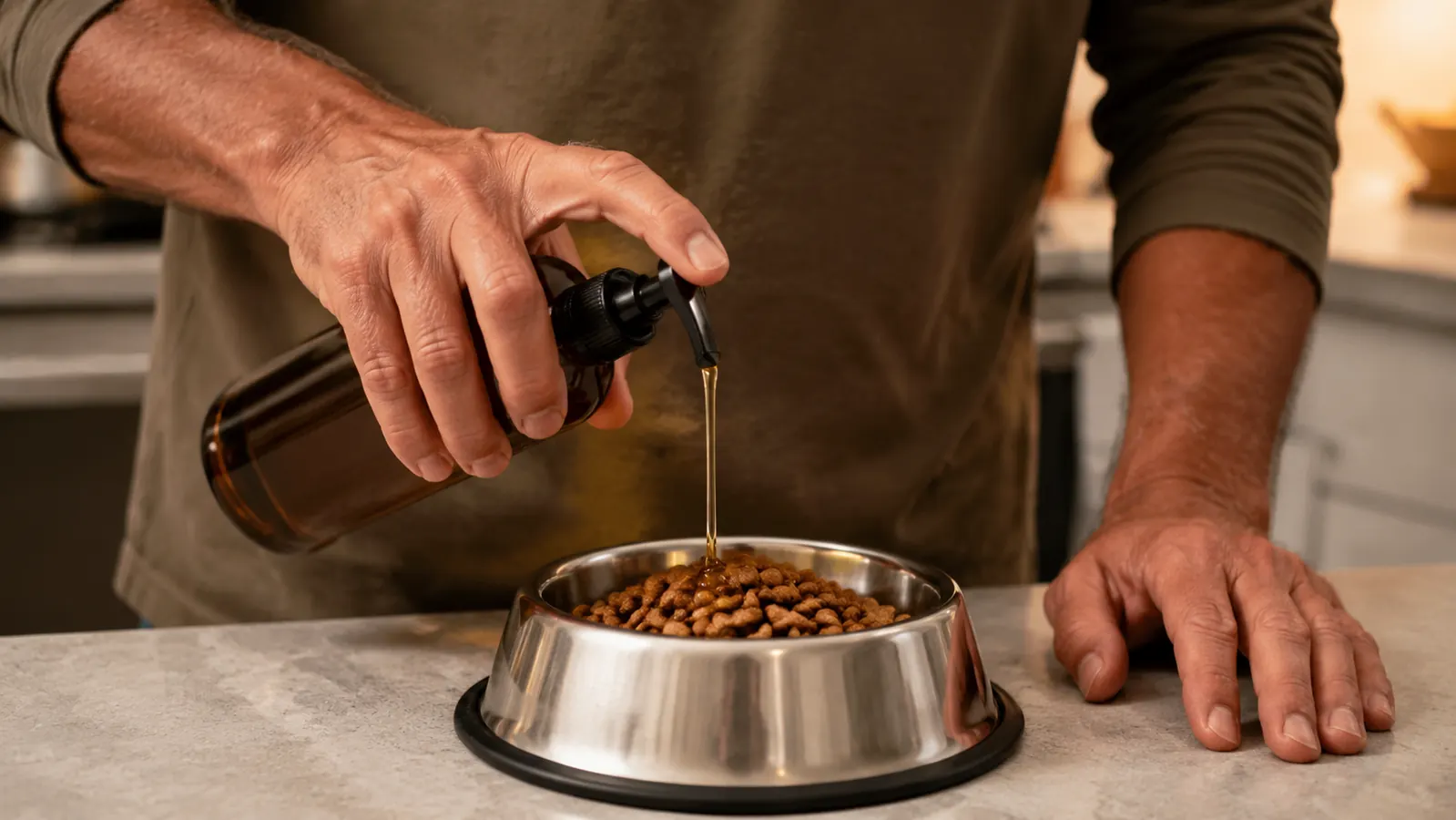
The bottle is sixteen ounces with a pump top, and I keep it in the fridge door next to the mustard, which felt strange the first week and completely normal by the second. For Millie, at twenty-eight pounds, I do one full pump over her morning kibble. Pearl gets a half pump worked into her wet food, and honestly the first few days she picked around it like I'd insulted her, then decided it was fine once it soaked into the food instead of sitting on top in a puddle. Gus gets a full pump too, mixed in well, because at seventy-four pounds he could probably use closer to a pump and a half, but I started conservative and asked his vet before going up, which is the right call with any supplement and a dog who's already being watched for something else.
I did not do this all at once. I introduced it to Millie first because she was the one with the visible problem, gave it two weeks on its own, then added it for Pearl, then Gus. That staggered start meant if any of them had a reaction, gas, loose stool, refusing food, I'd know which animal and which timing caused it. None of them did. Pearl was the pickiest about the smell initially, cats generally are, but she came around once she associated the smell with dinner rather than with something new and suspicious sitting in her bowl.
The pump itself deserves its own paragraph because it is the detail that decided whether this stayed on my counter or went back to Amazon. It is not perfectly consistent. Some mornings a full press gets you a generous pump, other mornings it sputters and you get half that, especially once the bottle drops below the halfway mark. I started eyeballing it against the fish oil smell hitting the bowl rather than trusting the pump count exactly, which is a workaround, not a defect that ruined anything, but it's worth knowing going in.
The First Six Weeks: What Changed and What Didn't
Nothing happened in week one. I want to say that plainly because I've read reviews that promise a coat transformation by day five and none of that matched what I saw with any of my three. What I noticed first, around week three, was that Millie's flaking had genuinely slowed. Not gone. Slowed. I could pet her and not come away with visible white dust on my dark leggings, which had become my unofficial test since I wasn't about to run a lab panel on my own dog.
By week six, Gus's coat had a shine to it under the porch light that I hadn't seen since he was maybe eight. He's twelve now, and older Lab coats tend to go a little coarse and matte no matter what you feed them, so I want to be careful not to oversell this. He still has an older dog's coat. It's just a noticeably better version of it than the one he had in the spring, and that's the honest ceiling of what a fish oil supplement can realistically do for a senior dog's skin.
Pearl was the surprise. Indoor cats don't shed the way dogs do, so I wasn't expecting much of a visible change, but the dandruff she'd get along her lower back in dry weather, the kind you find when you run a hand down her spine and feel little flakes catch under your fingernail, mostly disappeared by week eight. I did not connect this to Zesty Paws right away because I wasn't tracking Pearl as closely as Millie. It was only when I ran out of the bottle for about ten days waiting on a reorder that I noticed the dandruff creeping back, which told me more than the improvement itself did.
Ingredients and Sourcing
Zesty Paws lists wild Alaskan salmon oil as the base, with EPA and DHA omega-3 fatty acids as the active compounds doing the work here. I am not a vet and I am not going to tell you exactly what those compounds do in your specific animal's skin, that's a conversation for your vet, especially if your dog or cat is on any other medication or has a diagnosed condition. What I can tell you is what the label says and what I watched happen in my own house over six months, and those are two different kinds of information that I try not to blur together.
The ingredient list is short, which I liked. Salmon oil, a preservative blend, and that's close to it. No filler proteins, no artificial coloring that I could find on the label, which matters more for a liquid supplement than it would for a chew, since there's less room for a manufacturer to hide something behind a flavor coating. I did check that the batch I bought had a lot number and an expiration date printed clearly on the bottom of the bottle, which is a small thing but tells you the company is treating this like a product that goes bad, because fish oil absolutely does go bad, more on that below.
The Smell, Honestly
This is the section I skip past in most reviews because most reviews don't want to lose the sale over it. Zesty Paws Salmon Oil smells like fish. Not a faint background note, an actual fish smell that hits you when you open the fridge door, and again when you pump it onto the bowl. My husband asked me twice in the first month if something had gone bad in there. Nothing had. That's just what it smells like.
For the dogs, the smell is a selling point, not a drawback, Gus and Millie both perked up the moment the pump clicked, which tells you the palatability is real. For a household with a sensitive nose or a small kitchen with poor airflow, it's worth knowing before it shows up as a surprise. I now keep the bottle in a covered bin in the fridge door, which mostly solved it for me.
On storage, the label recommends refrigeration after opening and using the bottle within a few months once it's cracked open. I set a reminder on my phone for the ninety-day mark because rancid fish oil is worse for a coat than no fish oil at all, and it's an easy thing to lose track of when the bottle looks and pumps the same on day one and day one hundred.
Millie's Coat vs Gus's Skin vs Pearl's Patience
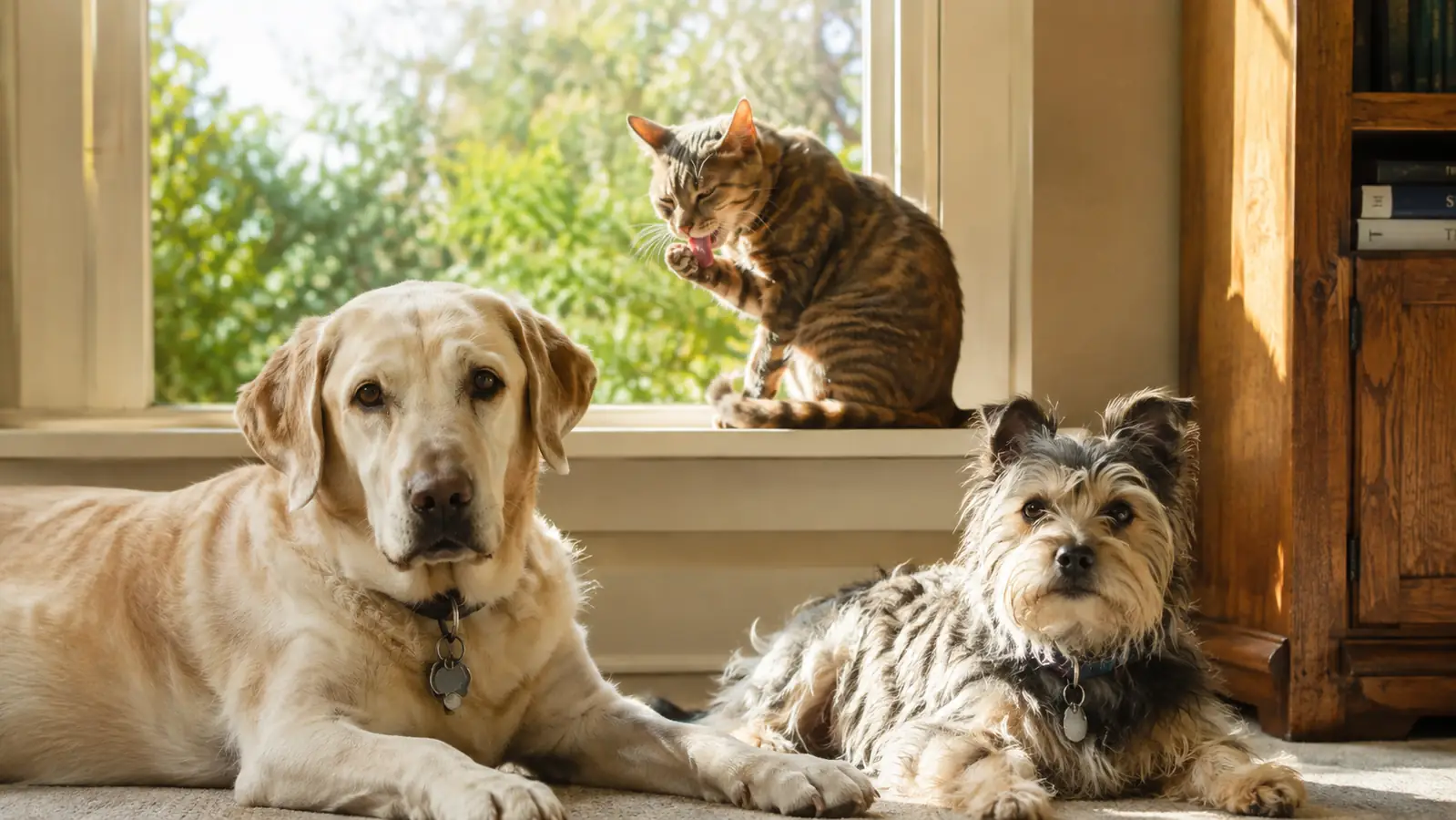
Running this across three different animals for six months gave me a comparison I didn't expect to have an opinion on. Millie, the healthy one, showed the fastest and clearest visible change because she had the most obvious starting problem, flaky, slightly dull coat with no underlying condition complicating the picture. Gus's improvement was slower and more modest, which tracks with him being twelve and already managed for his hip stiffness. His vet didn't flag any concern about adding the oil alongside what he's already on, but I'd tell anyone with a senior dog on other supplements or medication to run it by their vet first rather than assuming, the way I did with Millie because she wasn't taking anything else.
Pearl was the one where I learned the most about patience. Cats are simply slower to show change in a supplement like this, and slower to accept a new smell in their food to begin with. If you have a cat and a dog in the same house and you start both on the same day expecting the same timeline, you'll likely be disappointed in the cat's progress and unfairly impressed by the dog's. They are not the same animal and this product does not work at the same speed in both.
What I'd Do Differently
Knowing what I know after six months, I'd start all three animals at the same time instead of staggering them by weeks, at least once the first animal proved there was no reaction. The staggered start was the cautious call and I'd make it again with a new supplement in a house with a senior dog managing something else, but it did mean I lost a few weeks of potential improvement in Gus and Pearl while I was busy watching Millie. I'd also buy the smaller bottle first if your store carries one, just to confirm your specific pets will actually eat it happily before committing to the full sixteen ounces, since a bottle a picky cat won't touch is money you can't get back once it's opened.
I'd also set that refrigeration reminder from day one instead of week five, when I finally got around to it after reading enough about rancid fish oil to genuinely worry about it. A bottle that smells fine to a human nose isn't necessarily still good for a ninety-pound Lab's stomach, and pets can be more sensitive to spoiled oils than we are. It's a small habit, but it's the difference between a supplement that works quietly in the background and one that causes the exact stomach upset you were trying to avoid.
What I Liked
- Liquid pump dosing works across very different body sizes without needing three separate products
- Noticeable reduction in flaking and dullness within six to eight weeks for two of my three pets
- Short ingredient list with a visible lot number and expiration date on every bottle
- Formulated for both dogs and cats, genuinely useful in a mixed household
Where It Falls Short
- Strong fish smell that some households and some cats need time to adjust to
- Pump is inconsistent once the bottle drops below half full
- Needs refrigeration and a real use-by window, easy to forget and let go rancid
- Improvement is gradual, not visible in the first two to three weeks for most pets
It was only when I ran out for about ten days that I noticed Pearl's dandruff creeping back, which told me more than the improvement itself did.
Who This Is For
If you've got a dog or cat with a dull, flaky, or slightly rough coat and your vet has ruled out anything more serious going on underneath it, this is a reasonable and low-effort thing to add to a daily bowl. It's especially useful in a multi-pet household like mine where you don't want to stock a different supplement for every animal. The pump format also makes sense if your pet already takes something in pill or chew form and you're looking to avoid adding one more thing they have to chew or swallow. It's also a fit if you'd rather adjust dosage by pump count than by cutting a chew in half, which is genuinely awkward with most soft chew supplements once you're dealing with a cat's tiny body weight next to a seventy-plus pound Lab mix.
Who Should Skip It
If your pet's skin issue is severe, worsening, or came on suddenly, that's a vet visit first, not a supplement aisle decision, no fish oil replaces a diagnosis. Skip it too if you know you won't keep up with refrigeration and the use-by window, because a rancid bottle sitting warm on a shelf is worse than doing nothing. And if the smell alone is a dealbreaker in your kitchen, there are capsule alternatives worth looking at instead, even though they lose some of the dosing flexibility that made this one work for three very different animals in my house.
Ready to see if it works the same way for your dog or cat
Six months in, this is still the bottle in my fridge door, not the one I gave up on. See current availability and pricing.
Amazon Check Today's Price on Amazon →